Read Dilsa Demirbag-Sten’s speech at the award ceremony of KTH’s Grand Prize
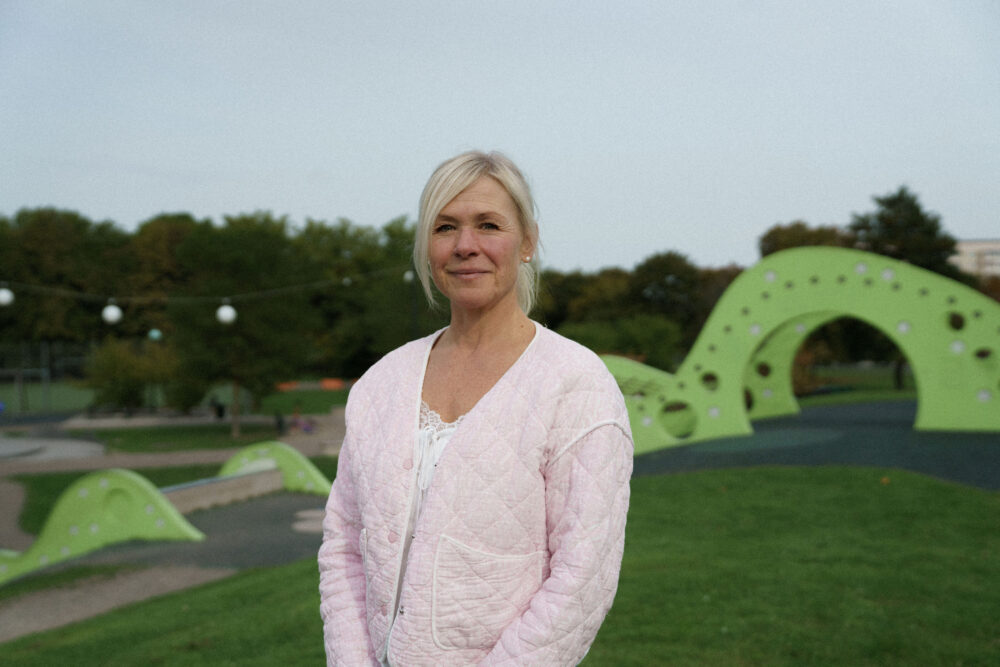
In November, Dilsa Demirbag-Sten received KTH's 2019 Grand Prize for her work with the Berättarministeriet, which aims to ensure that children in vulnerable areas have access to education and knowledge.
Ladies and gentlemen, let me tell you a story about Louise Germain, who was a teacher at a primary school in a small town, Mondovi (now Dréan, located in northern Algeria), at the beginning of the 20th century. Some of Monsieur Germaine's students were poor and often went hungry during the day; as you can imagine, they had difficulty concentrating on their studies. But the boys were fortunate to be able to attend school at all, unlike most girls.
On November 19, 1957, Monsieur German received a letter from one of his former students that read:
Dear Monsieur Germain,
I let the commotion around me these days subside a bit before speaking to you from the bottom of my heart. I have just been given far too great an honour, one I neither sought nor solicited.
But when I heard the news, my first thought, after my mother, was of you. Without you, without the affectionate hand you extended to the small poor child that I was, without your teaching and example, none of all this would have happened.
I don’t make too much of this kind of honor. But at least it gives me the opportunity to tell you what you have been and still are to me, and to assure you that your efforts, your work, and the generous heart you put into it still live in one of your little schoolboys who, despite the years, has never stopped being your grateful pupil. I embrace you with all my heart.
Albert Camus
The letter from the great author reached Monsieur Germain shortly after Camus was awarded the Nobel Prize in Literature.
Albert Camus was born on November 7, 1913 in Algeria, then a French colony. He was 11 months old when his father and family provider died in battle during the First World War. His mother, partially deaf and illiterate, raised her son in extreme poverty and with barely the support of the boy's not always friendly stepmother. It was at school that the young Camus could shine and grow, thanks to the encouragement and support of his beloved teacher.
Louis German knew that without education and training, a person remains in the world, in the culture in which they were born. He also knew that everyone can change and make a journey based on their own circumstances, and that this journey can go a long way – regardless of background. He was one of those who realized that as a child and young person, one needs help to begin and complete such a journey, which involves cultivating the soul’s wealth.
The history of humanity’s progress and success is also a history of the education system and the role of the teacher. In Sweden, it has been established for several decades that all children, regardless of their parents’ backgrounds, have the right to a good and equal education, and the school has an explicit compensatory mission. This reflects both a humanistic view and the very foundation of the liberal democratic concept of the rule of law – equal before the law but also a fair distribution of opportunities and resources.
Today, the Swedish school is unable to fulfill its compensatory mission. This means that more and more children are bound by a social inheritance and the conditions they were born into. This is a serious shortcoming in our society and even a threat to our democracy. Schools are responsible for the transfer of knowledge in society, but they are also responsible for educating the democratic citizen who, with their intellect, drive, and hard work, takes humanity to the next level.
Humanity faces great challenges (climate change, diseases and much more) and the free world stands on an increasingly shaky foundation where many feel abandoned by society. We do not know where the next Camus, Feynman or Einstein will be born or grow up. Camus, who was born in extreme poverty, left behind magnificent literature. Today, we are all grateful for Louis Germaine’s loving, responsible and encouraging attitude towards his students.
All children are born equally curious, intelligent, and capable. What they need is an adult, preferably more than one, who reflects this and reminds them of it through their journey in life.
We cannot all be a Louis German, Abram Bader, or Konstatinos Karatheodoris. However, we can all contribute and take responsibility for ensuring that all children receive a good and equal education so that more people seek out places at places like KTH, for example. We can all, in our individual capacity, be the adults who remind that child who is vulnerable that she is wise, smart, talented, and capable. All children have the right to know what the world and life have to offer.
Therefore, I am particularly pleased that KTH, in its justification, wisely highlights the importance of a comparable basic education for higher education and research.
Ladies and gentlemen, thank you for a fantastic evening. I am deeply honored to be awarded KTH's Grand Prize and humbled by the list of previous recipients.
Dilsa Demirbag-Sten