Seminar organized by the Ministry of Storytelling and Karolinska Institutet
Do we still think for ourselves?
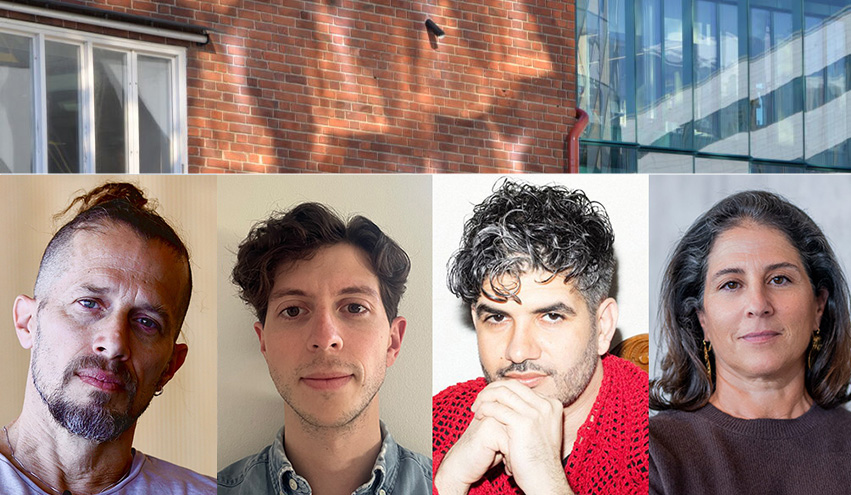
The Berättarministeriet of Social Affairs and the Karolinska Institute are inviting people to a discussion about artificial intelligence, attention and human existence.
On October 16 The Ministry of Information and Karolinska Institutet are organizing the seminar Do we still think for ourselves? Artificial intelligence is involved in ever more stages of the intellectual process: in drafts, in summaries, in formulating conclusions. What this means for human attention – which in philosophy has long been considered a prerequisite for independent thinking – is a question that is becoming increasingly relevant in both the humanities and the natural sciences.
The science historian and New Yorker writer D. Graham Burnett, Professor at Princeton University and long-time engaged in the research on the history of attention, talks with David Sten, A master's student in philosophy whose everyday life is already heavily shaped by these technologies through his work. Together, they illuminate the question based on two different experiences: historical analysis and everyday life. The conversation is led by the author Agri Ismaïl and is based on a question of growing interest in the humanities and the medical sciences: how is human thinking, human attention, and human existence affected when more and more of these functions are shared with AI systems?
Date and time: October 16, 14:00–15:30
Location: Lecture room Jacob Berzelius, Karolinska Institutet – Berzelius way 3, Solna.
The seminar is free of charge.
 D. Graham Burnett is a professor of history at Princeton University, author, and artistic practitioner. His work includes a particular interest in the relationship between knowledge, technology, and society. Burnett is the founder of The Institute for Sustained Attention, Friends of Attention, and The Strother School of Radical Attention – initiatives that work in various ways to deepen our understanding of human attention and strengthen our ability to safeguard it in an era where technological development increasingly competes for it. Earlier this year, Friends of Attention published ATTENSITY! A Manifesto of the Attention Liberation Movement (2026), which addresses exactly these issues.
 David Sten He is a market analyst with an academic background in philosophy and physics, with a master's degree in philosophy from the University of Amsterdam, as well as a bachelor's degree from Northwestern University. His academic work has, among other things, dealt with Nietzsche's genealogical method, social epistemology, and the merit and reward systems of science. Today, he works on market research at Early Studies.
 Agri Ismaïl He is a writer who previously worked as a lawyer in London, Dubai, and Iraqi Kurdistan. He writes criticism and cultural debate and has been published in, among other places, Expressen, Glänta, Ord & Bild, and The White Review. In 2024, he debuted with the novel Hyper, who was nominated for the August Prize and awarded the Katapult Prize for the best debut novel.
 Dilsa Demirbag-Sten She is a journalist, author, and community entrepreneur. As the general secretary and co-founder of the Storytelling Berättarministeriet, she works to promote children’s literacy and writing ability in socioeconomically disadvantaged schools. Dilsa has a long list of trust positions, including as a board member at the Institute for Future Studies, Linköping University, and the Nobel Foundation.
The day is moderated by Agri Ismaïl.
14.00 Introduction
Dilsa Demirbag-Sten, Secretary General, Foundation of the Ministry of Storytelling
14.05 Speech
D. Graham Burnett, professor of the history of science, Princeton University
14.25 Call
D. Graham Burnett and David Sten.
14.55 Questions from the audience
15.25 Conclusion
The Berättarministeriet of Education, founded in 2011, is a foundation dedicated to reducing the negative consequences of segregation on children's schooling by supporting teachers and students in schools with high levels of poverty.socio-economic indexin daily teaching. This is done through skills-enhancing teacher support and free school programs that attract students, regardless of their level of knowledge, to master the written word. The Berättarministeriet’s of Education’s vision is a Sweden where all children and young people are secure in the written word and have the prerequisites to actively participate in society.
The Berättarministeriet of Narrative has been highlighted both nationally and internationally as a leading expert thanks to the foundation’s innovative pedagogical storytelling method and its impact on students” learning, including by the OECD, which highlighted the Ministry of Narrative as a ”Best practice” example in the report.Creative Minds in Actionfrom 2022.
The Karolinska Institutet is one of the world's leading medical universities, with the vision of promoting knowledge and working towards better health for all. The Karolinska Institutet accounts for the largest proportion of all academic medical research conducted in Sweden and offers the country's widest range of education in medicine and health sciences. The Nobel Assembly at the Karolinska Institutet appoints the Nobel Prize laureates in medicine.
Karolinska Institutet is Sweden’s largest medical university, with 6,700 students, 2,000 doctoral students, and over 5,500 employees. The university is divided into three institutional groups with a total of 21 departments. The activities are carried out at the two campus areas in Solna and Flemingsberg, as well as at several hospitals and other healthcare facilities in the Stockholm region.