Speech by speakers before conference on Hanaholmen on August 20
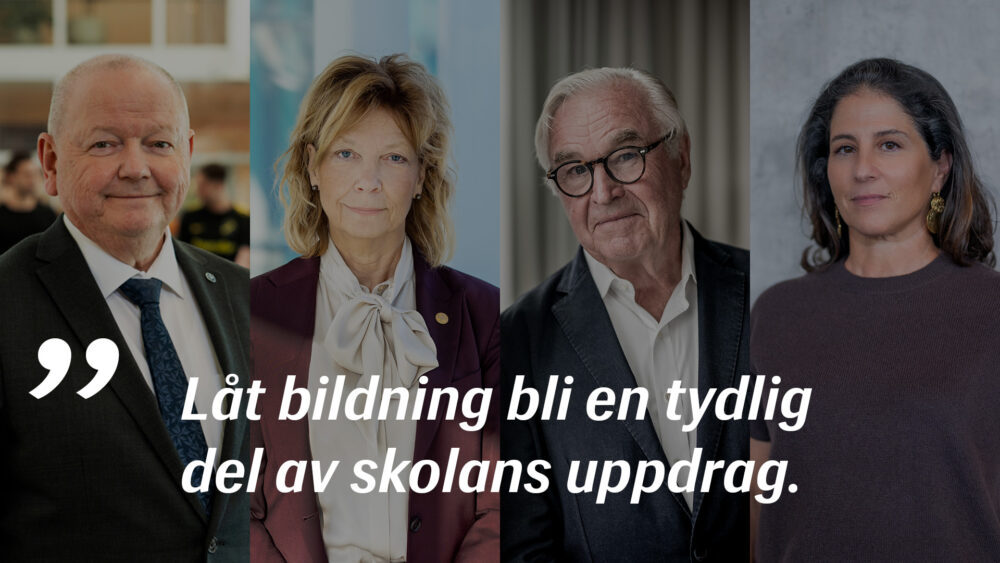
What does education mean in a time characterized by populism, polarization, and an increasingly complex information landscape? This is the starting point for the conference that the Berättarministeriet of Education and Hanaholmen are inviting to take place. Among the participants are Birgit Schaffar, professor of philosophy of education at the University of Helsinki, Robert Egnell, rector of the Swedish Defence Higher School, Lisa Månsson, superintendent and head of the National Museum of Natural History, and Daniel Hermansson, podcaster and author.

For Birgit Schaffar Education is about more than acquiring knowledge or training for a specific goal. When does education become education?
A learning process becomes formative when it does not merely prepare for a certain goal predetermined in advance. Formation occurs when we give and are given space to critically examine what we learn. This invites us to reflect on our own culture and our own professional activities. This is a form of critical thinking that always also includes the self-critical question: how can I take responsibility through what I learn for a better future?
 Being able to understand and critically examine one's surroundings also becomes central when education is linked to questions about security. According to Major General Sami Nurmi education is an integral part of preparedness and defense.
–The concept of preparedness is often associated solely with military defense. However, it has a much broader meaning and is highly linked to the resilience of society.
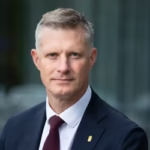 Robert Egnell argues that the importance of education extends far beyond the ability to resist disinformation.
–The most common answer to the question of how education and security are related is that education protects against disinformation and influence operations. That is true, but it is too limited. Education is fundamentally about understanding oneself and one’s surroundings, and that is also how we build trust between people. Security is ultimately about a society’s ability to hold together and act together under pressure, and that ability rests on our ability to interpret what is happening, put words to it, and disagree without becoming enemies. Cultural practice and storytelling are exercises that train just that – to get inside someone else’s perspective and keep multiple perspectives in our heads at the same time.
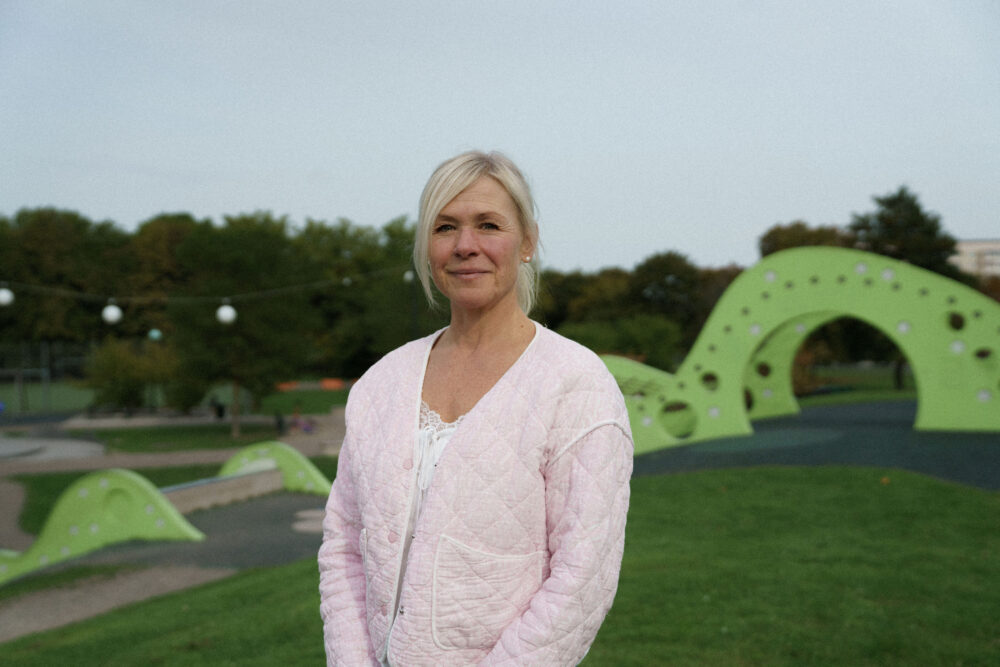
 The roles of culture and knowledge in society become particularly evident when facts and common points of reference are questioned. Because Lisa Månsson Museums are an important part of the answer. Museums have a great deal of trust from the public and the opportunity to reach people on a broad front.
–For several years, the museums have shown that we have the highest level of trust among all institutions in Sweden. Moreover, we actively work to reach out to the broader community. This gives us excellent conditions to succeed in our most important task, which is to offer a common, fact-based foundation of knowledge from which we can understand our world.
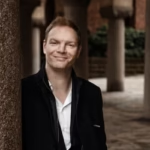 But knowledge is not conveyed solely through facts. How we tell stories also plays a crucial role in what we remember and how we absorb what we encounter. Daniel Hermansson points to the story's special ability to capture our attention and create recognition. Why do we remember a good story better than a page of facts?
–A good story contains living characters of flesh and blood that we can identify with, whether we like them or not. These characters encounter dramatic situations that they need to handle. The story contains suspense with an unclear ending; a side of the facts cannot easily capture that feeling.
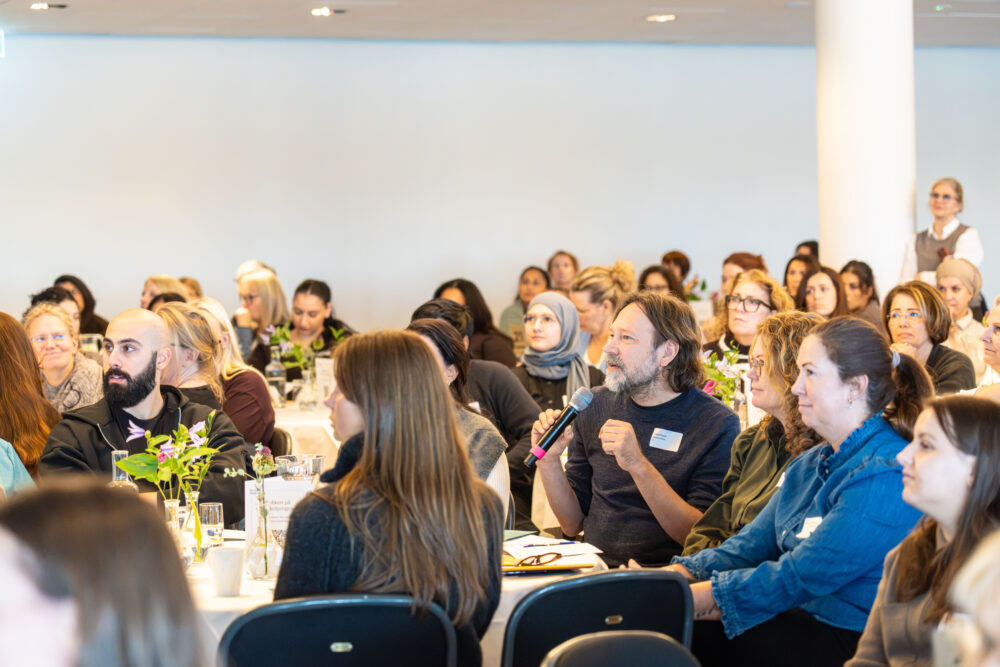
Together, the four perspectives raise questions about what education actually means – and what role education, culture, knowledge, and storytelling can play for a society that needs to be able to handle both disagreement and uncertainty without losing the ability to understand each other. Now, you can watch the entire conference on BM Play,
READ MORE ABOUT THE CONFERENCE, PROGRAM AND PARTICIPANTS HERE.