Seminary series organized by the Ministry of Storytelling and the Swedish Academy
A Humanistic Perspective – on imagination, play and creativity in today’s society
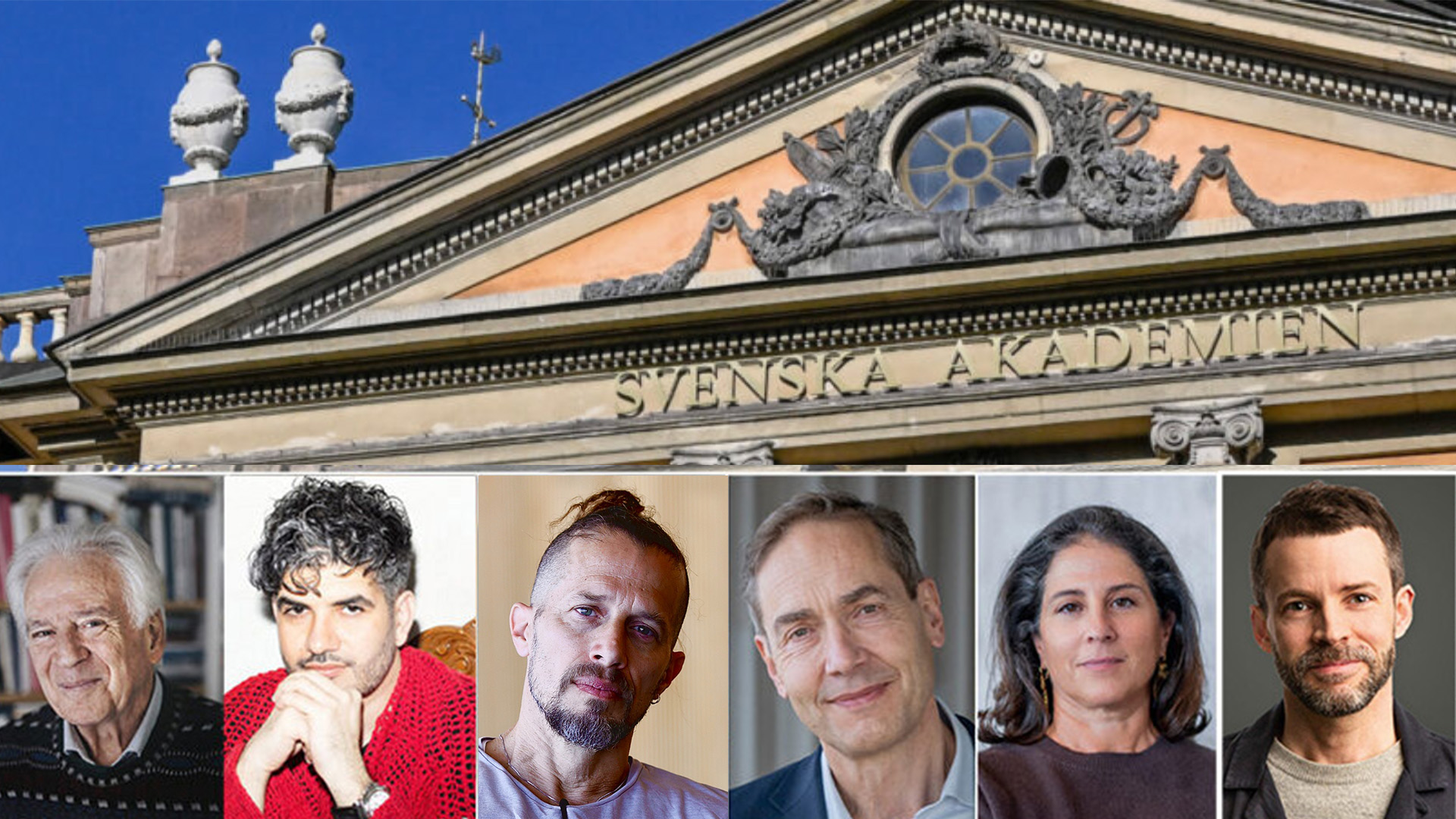
Berättarministeriet and the Swedish Academy invite to a seminar at Börshuset in Stockholm
In order to explore and highlight the importance of imagination, play and creativity for humans and society, the Berättarministeriet of Storytelling and the Swedish Academy are jointly organizing two half-day seminars on different topics.
October 15 owns the seminar Presenting inner worlds – about the importance of play for the individual and society rooms. Through play, we can develop creativity, innovation, and new possibilities; we can shape our inner world, try out new ideas, deepen our thoughts and feelings, and enter into a different world of ideas. At the same time, its spontaneous creative power is often suppressed in our result-oriented society – but how many of our current problems would have looked different if we had a more playful and curious attitude towards trial and error?
Participating speakers are Peter Gärdenfors, philosopher and emeritus professor of cognitive science at Lund University, Agri Ismaïl, author and journalist and D. Graham Burnett, a historian, author, and professor of history at Princeton University.
Please note that the seminar is held entirely in English.
On June 10 the first seminar took place, Imagining a world and creating it – about imagination and creativity in the present and the future. During the seminar, we focused on imagination and creativity as fundamental human abilities – for learning, critical thinking, innovation, and societal development. Participating speakers included the internationally renowned filmmaker Tariq Saleh, Danica Kragić Jensfelt, award-winning professor of computer science and one of Sweden’s leading voices in research on the interaction between humans and machines, and David Bäckström, neurologist, researcher and author of the book Fantasy (2022).
The seminars are recorded and published on BM play.
Presenting inner worlds – about the importance of play for the individual and society
Through play, we can develop creativity, innovation, and new possibilities; we can shape our inner world, try new ideas, deepen our thoughts and feelings, and enter into a different world of ideas. At the same time, its spontaneous creative power is often suppressed in our result-oriented society – but how many of our current problems would have looked different if we had a more playful and curious attitude towards trial and error?
Participating speakers are Peter Gärdenfors, philosopher and emeritus professor of cognitive science at Lund University, Agri Ismaïl, author and journalist and D. Graham Burnett, a historian, author, and professor of history at Princeton University.
Please note that the seminar is held entirely in English.
 Peter Gärdenfors is a philosopher and emeritus professor of cognitive science at Lund University. His research deals, among other things, with conceptualization, knowledge, decision-making, the development of language, and how people create meaning through thinking. He has written several books about human thinking, language, and the search for meaning, including How Homo became sapiens and The person seeking meaning.
 Agri Ismaïl He is a writer who previously worked as a lawyer in London, Dubai, and Iraqi Kurdistan. He writes criticism and cultural debate and has been published in, among others, Expressen, Glänta, Ord & Bild, and The White Review. In 2024, he debuted with the novel Hyper, who was nominated for the August Prize and awarded the Katapult Prize for the best debut novel.
 D. Graham Burnett is a professor of history at Princeton University, author, and artistic practitioner. His work includes a particular interest in the relationship between knowledge, technology, and society. Burnett is the founder of The Institute for Sustained Attention, Friends of Attention, and The Strother School of Radical Attention – initiatives that work in various ways to deepen our understanding of human attention and strengthen our ability to safeguard it in an era where technological development increasingly competes for it. Earlier this year, Friends of Attention published ATTENSITY! A Manifesto of the Attention Liberation Movement (2026), which addresses exactly these issues.

Jonas Mattsson is a journalist and author, and has been editor-in-chief at Research & Progress. Before that, he was, among other things, editor-in-chief of Modern Psychology and Vice President of Vetenskapsmedia i Sverige AB. In 2022 he published the book Ekvilibrium – about the connection between creativity and madnesstogether with Simon Kyaga.
The day is moderated by Jonas Mattsson, journalist, author and editor-in-chief of Research & progress.
9.00 Coffee and registration
9.30 Welcome and inIntroduction
Mats Malm, Professor of Literary Studies at the University of Gothenburg and member of the Swedish Academy Dilsa Demirbag-Sten, Journalist, author and Secretary General of the Ministry of Narrative.
9.40 Theme 1: The human being as a playful, creative being
Peter Gärdenfors, Philosopher and emeritus professor at Lund University.
10.00 Theme 2: Play, artistry and the development of new approaches in practice
Agri Ismaïl, author and lawyer.
10.20 Coffee break
10.40 Theme 3: Play as a source of resilience in today's society
D. Graham Burnett, a historian of science and professor at Princeton University.
11.00 Panel discussions and questions from the audience
11.45 Thanks and summary
12.00 Mingellunch
Imagining a world and creating it – about imagination and creativity in the present and the future
Since time immemorial, humans have asked questions about the world we live in, created stories about where we came from, and formed ideas about all the possibilities of the future. Of the technology and culture that surrounds us – what would really have existed without our imagination?
Unique to humans is their ability to imagine things that do not yet exist, and with the help of their creative abilities to design a new reality. Fantasy can be perceived as something anti-intellectual and facile. At the same time, fantasy is a prerequisite for almost all kinds of creative, critical, scientific, and empathetic thinking and creation. That is, the abilities that are becoming increasingly important in an ever more complex and polarized contemporary world. In other words, isn’t it time we recognized the creative power of fantasy and gave fantasy the central place it deserves?
Through the participation of invited speakers, a panel discussion, and examples from research and art, we explore how imagination shapes our understanding of contemporary society and our ability to envision the future.
The Berättarministeriet of Education, founded in 2011, is a foundation dedicated to reducing the negative consequences of segregation on children's schooling by supporting teachers and students in schools with high levels of poverty.socio-economic indexin daily teaching. This is done through skills-enhancing teacher support and free school programs that attract students, regardless of their level of knowledge, to master the written word. The Berättarministeriet’s of Education’s vision is a Sweden where all children and young people are secure in the written word and have the prerequisites to actively participate in society.
The Berättarministeriet of Narrative has been highlighted both nationally and internationally as a leading expert thanks to the foundation’s innovative pedagogical storytelling method and its impact on students” learning, including by the OECD, which highlighted the Ministry of Narrative as a ”Best practice” example in the report.Creative Minds in Actionfrom 2022.
The Swedish Academy, established in 1786, is an independent cultural institution that works to strengthen the Swedish language and literature. A large part of the Academy's work concerns the preparation and decision-making regarding prizes and scholarships. Most well-known is the Nobel Prize in Literature, which gives the Academy an important international role in promoting outstanding writing and enriching reading experiences. But the Academy also annually awards a large number of domestic authors, translators, critics, researchers, teachers, and librarians, and grants funds for cultural activities around the country. The Swedish Academy has an extensive publishing program and publishesThe Swedish Academy's dictionary(SAOB) andThe Swedish Academy's dictionary(SAOL), but also many other historical texts and independent works.