A seminar series organised by Berättarministeriet and The Swedish Academy
A human perspective: Concerning imagination, play, and creativity in today’s society
Manifesting inner worlds: why play matters for the individual and for society
Through the phenomenon of play we experiment our way onward, young and old. In play there is a permission to make mistakes and learn from them; to try and try again until new skills have been cultivated. It’s easy to think only children engage in play, but play is something that can benefit us throughout our lives. Through play we can express our inner worlds, test out emerging half-formed ideas, find new depths to our thoughts and feelings, but also step into another’s idea space and continue to construct it together.
Play has both an intrinsic value in relation to well-being and an instrumental value regarding the development of creativity, innovation, and new opportunities. At the same time, the spontaneous creative power of playfulness is often overlooked in our result-focused society. However, how many of our current problems would not appear different if we had a more playfully curious approach towards trials and mistakes?
With the help of invited speakers, a panel discussion and examples from research and the arts, we will examine the meaning of play for individuals, culture, and democracy.
The seminar will take place on 15 October at the Swedish Academy in Gamla Stan, Stockholm.
If you have any questions about the seminar, please contact info@berattarministeriet.se.
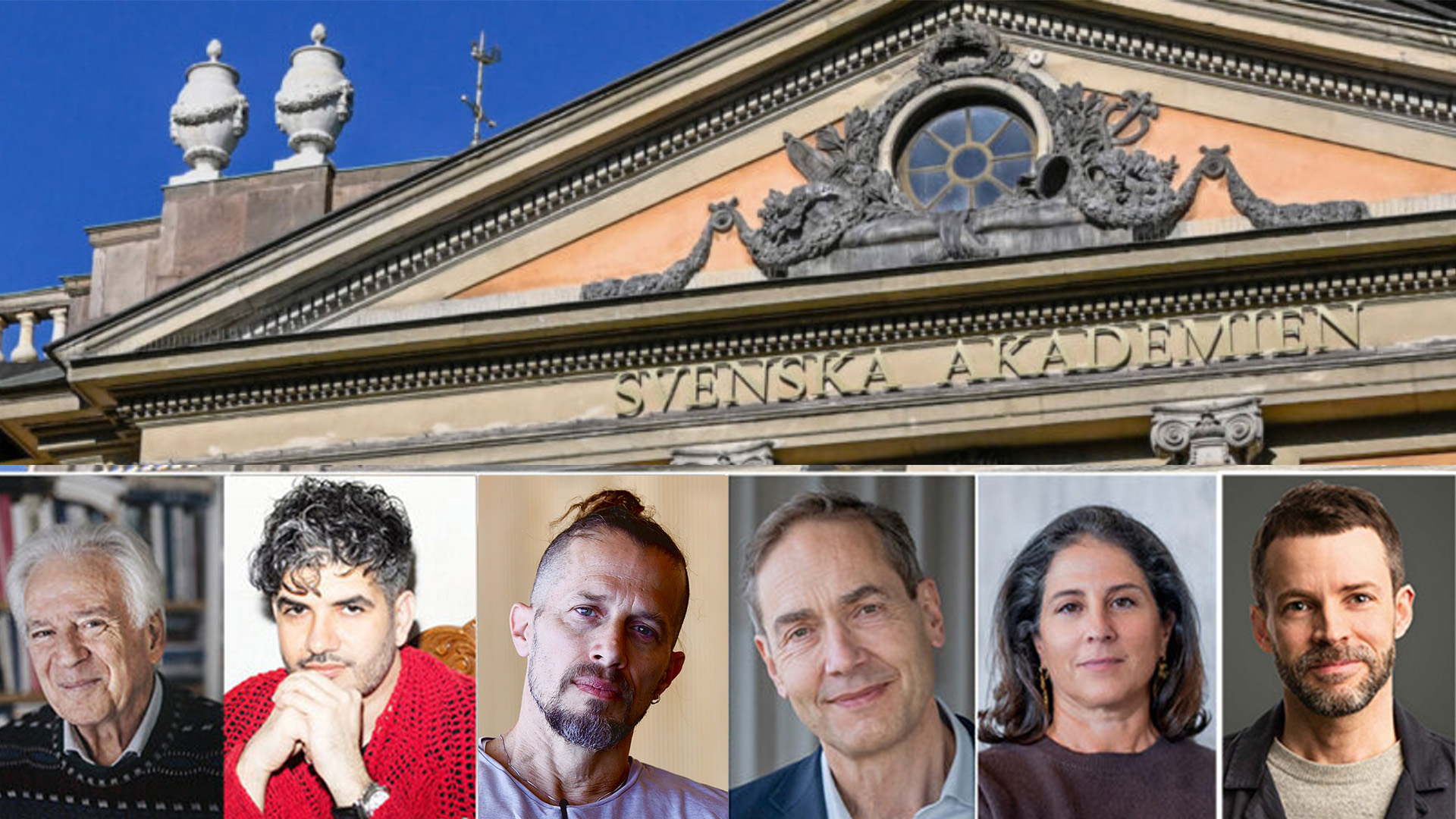
 Peter Gärdenfors, philosopher and professor emeritus of cognitive science at Lund University. His research focuses, among other things, on concept formation, knowledge, decision-making, the development of language, and how people create meaning through thought. He has written several books on human thought, language, and the search for meaning, including Hur homo blev sapiens [How Homo Became Sapiens] and Den meningssökande människan [The Meaning-Seeking Human].
 Agri Ismaïl, author and corporate lawyer, previously working in London, Dubai, and Iraqi Kurdistan. He writes criticism and cultural commentary and has been published in Expressen, Glänta, Ord & Bild, and The White Review, among other publications. In 2024, he made his literary debut with the novel Hyper, published simultaneously in Swedish and English, which received critical acclaim both nationally and internationally, for example winning the Katapult Prize for best literary debut in Sweden.
 D. Graham Burnett, Chair professor of history at Princeton University, author, and artistic practitioner. His work includes a particular interest in the relationship between knowledge, technology, and society. Burnett is the founder of several initiatives dedicated to deepening our understanding of human attention and strengthening our ability to protect it. Earlier this year, Friends of Attention, a society founded by Burnett and colleagues, published ATTENSITY! A Manifesto of the Attention Liberation Movement (2026), which addresses these issues.

Jonas Mattsson, journalist and author who has served as editor-in-chief of Forskning & Framsteg [Research & Development] since 2021. Previously, he was editor-in-chief of Modern Psykologi and deputy CEO of Vetenskapsmedia i Sverige AB, among other roles. In 2022, he co-authored Ekvilibrium – om sambandet mellan kreativitet och galenskap [Equilibrium – about the relationship between creativity and madness] with the psychiatrist and neuroscientist Simon Kyaga.
Dilsa Demirbag-Sten, author, journalist, and the co-founder and secretary general of Berättarministeriet, established in 2011. She is a prominent advocate for literacy, education, and social inclusion, working to ensure that children in socioeconomically disadvantaged areas have equal opportunities to develop their language skills and creativity.

Mats Malm, literary scholar, professor of comparative literature at the University of Gothenburg, and served as permanent secretary of the Swedish Academy between 2019 and 2026. His research focuses on older Nordic literature, literary interpretation, and cultural heritage, and he also leads Litteraturbanken, a digital initiative dedicated to making Swedish literary works accessible to the public.
9.30 Welcome and introduction
Mats Malm, professor of literary science at Gothenburg University and member of The Swedish Academy and Dilsa Demirbag-Sten, journalist, author and general secretary of Berättarministeriet.
9.40 Theme 1: The Human as a Playing, Creative Being
Peter Gärdenfors, philosopher and professor emeritus of cognitive science at Lund University.
10.00 Theme 2: Play, Artistry and the Development of New Methods in Practice
Agri Ismaïl, author and lawyer.
10.20 Coffee break
10.40 Theme 3: Play as a Source of Resistance in Today’s Society
Graham Burnett, Chair professor of history and history of science at Princeton University.
11.00 Panel discussion and questions from the audience
Moderated by Jonas Mattsson (author and editor-in-chief of Forskning & Framsteg)
11.45 Concluding remarks
12.00 Mingle lunch
Berättarministeriet (Ministry of Storytelling), founded in 2011, is a non-profit, non-partisan foundation striving for a society where all children are confident with written expressions. Berättarministeriet offers support to teachers and students in Swedish primary schools located in socioeconomically disadvantaged areas. This is done through teacher professional learning and development and free school programs that entice students, regardless of skill level, to conquer the written word.
Ministry of Storytelling has been upheld both nationally and internationally as a leading expert for their innovative pedagogical storytelling-method and its’ effects on children’s learning, among others by OECD, who highlighted the foundation as a “Best practice”-example in their 2022 report Creative Minds in Action.
Svenska Akademien (The Swedish Academy) is an independent cultural institution, founded in 1786, whose purpose is to promote Swedish language and literature. To this end, The Academy provides support to writers, translators, critics, researchers, teachers and librarians in awarding numerous prizes and scholarships, while also allocating grants to cultural organisations throughout Sweden. Among the most famous tasks entrusted to the Academy is to nominate the Nobel laureates in literature, which therefore gives it an important international role to play in the promotion of superlative writing and enriching reading experiences.